


Hyperbaric Oxygen Therapy (HBOT)
Hyperbaric Oxygen Therapy (HBOT) involves breathing pure oxygen inside a pressurised chamber. At increased atmospheric pressure, oxygen dissolves into the blood plasma at a concentration significantly higher than is possible under normal conditions — delivering it efficiently to tissues that may be poorly oxygenated, inflamed, or slow to heal.
What to expect
Treatment Overview
Hyperbaric Oxygen Therapy involves breathing pure oxygen in a pressurized chamber, which raises the amount of oxygen dissolved in blood and delivered to tissues. Typical sessions last 60–90 minutes while pressure is gradually increased and decreased under supervision. Patients may feel mild ear pressure similar to airplane travel; staff provide guidance to equalize. Treatments can be single sessions for acute needs or a series for chronic conditions. Continuous monitoring by trained personnel ensures comfort and safety. HBOT is non-invasive and generally well tolerated when administered according to clinical protocols.
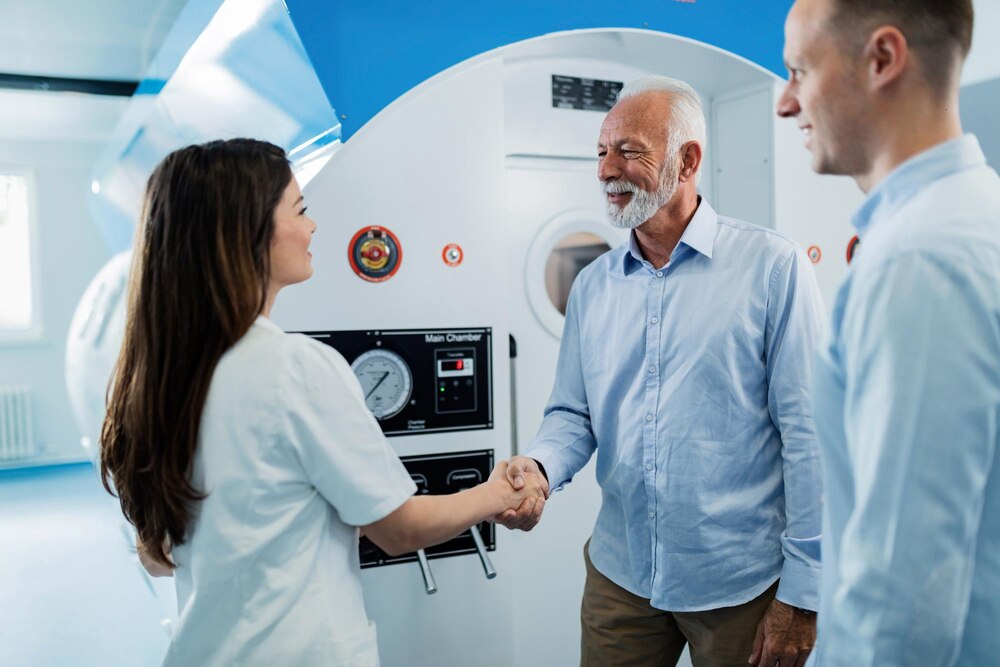
What is Hyperbaric Oxygen Therapy?
Hyperbaric Oxygen Therapy (HBOT) involves breathing pure oxygen inside a pressurised chamber, increasing the amount of oxygen dissolved in the blood plasma. This enhanced oxygen delivery can support tissue repair, cellular function and the body’s natural healing processes. HBOT may be used as part of treatment for certain conditions, including non-healing wounds, radiation tissue damage and carbon monoxide poisoning, where clinically appropriate. Treatment is provided in monoplace or multiplace chambers, with pressure levels and session times tailored by trained healthcare professionals. Medical screening and safety protocols are used to assess suitability and minimise risks, making HBOT a targeted supportive therapy in appropriate clinical care.
Enhanced wound healing
Improved oxygenation to tissues
Supports recovery after injury
Adjunct to standard care
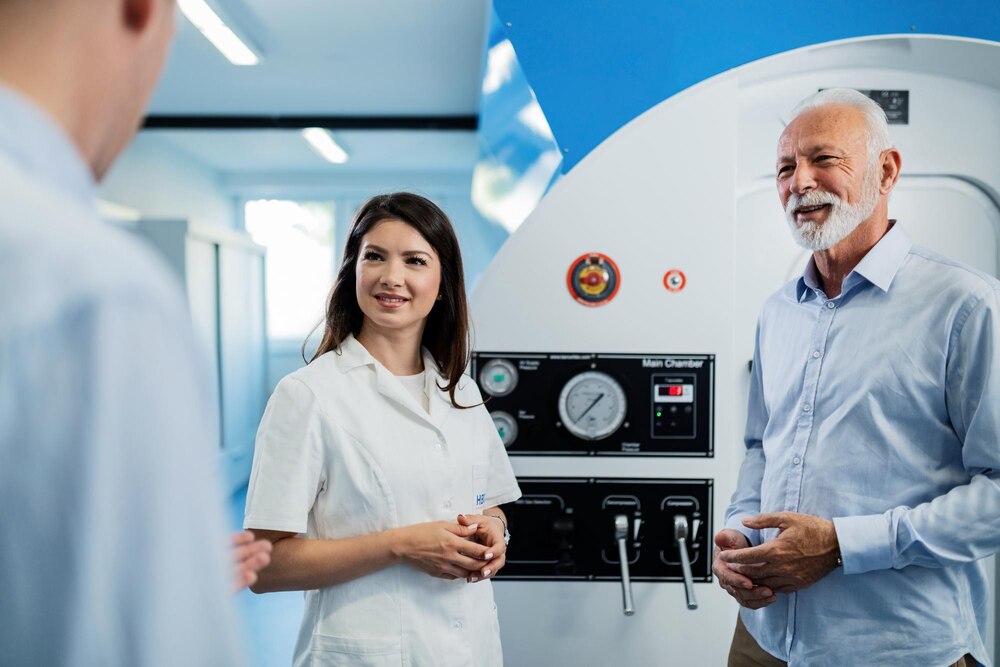
How it Works
Pressurized oxygen increases tissue oxygen levels.
Common Uses
Chronic wounds, radiation injury, decompression sickness.
Safety
Monitored sessions under established clinical protocols.
Safety & Standards
Clinical Protocols
Clinical HBOT protocols vary by indication but prioritize patient screening, infection control, and controlled pressure application. Pre-treatment evaluation identifies contraindications such as untreated pneumothorax and certain medications. Treatment parameters—pressure (often 1.5–3.0 ATA), oxygen concentration, and session duration—are selected based on diagnosis. Continuous monitoring includes pulse oximetry and communication with staff; facilities maintain fire-safety and emergency procedures due to high-oxygen environments. Regular assessment during a course tracks response and side effects. When delivered per guidelines, HBOT demonstrates a favorable safety profile and measurable clinical benefits.
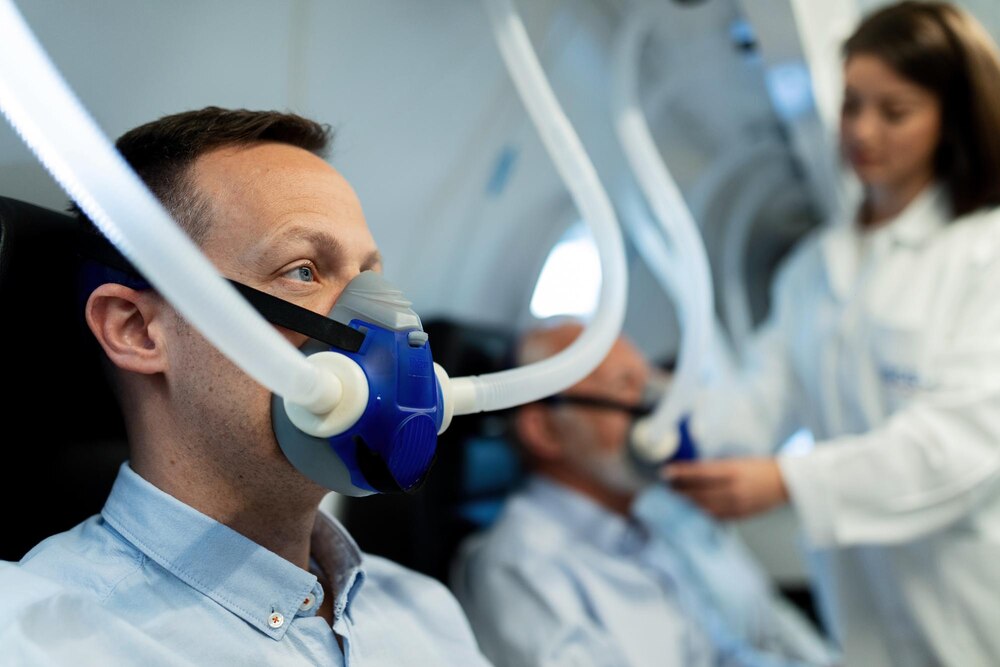
What Can it Help With?
Hyperbaric Oxygen Therapy may support the body’s natural healing processes by increasing oxygen delivery to tissues. It is used for a range of specific medical conditions, including certain wounds, tissue injuries and conditions where improved oxygenation may support recovery.
Sports recovery and injury rehabilitation
Chronic fatigue and post-viral symptoms
Wound healing and tissue repair
Inflammation and joint conditions
General health optimisation